Inside the Iran War decision: How Netanyahu sold Trump on a conflict his own advisers called ‘farcical’
05/05/2026 / By Willow Tohi
- Israeli Prime Minister Benjamin Netanyahu persuaded President Donald Trump to launch war against Iran through a February 2026 Situation Room presentation, despite deep skepticism from Trump’s top advisers.
- CIA Director John Ratcliffe, Secretary of State Marco Rubio, and Joint Chiefs Chairman Gen. Dan Caine deemed Netanyahu’s regime change predictions “farcical” and “bullsh*t”.
- Vice President JD Vance was the most vocal opponent of military action, warning of regional chaos, mass casualties, and political betrayal of Trump’s anti-war base.
- Netanyahu’s promises of a quick war have failed: Iran continues daily ballistic missile launches, has blocked the Strait of Hormuz, and struck neighboring countries.
- Trump reportedly dismissed military warnings about weapon stockpile depletion and the difficulty of securing the Strait of Hormuz, believing Iran would capitulate quickly.
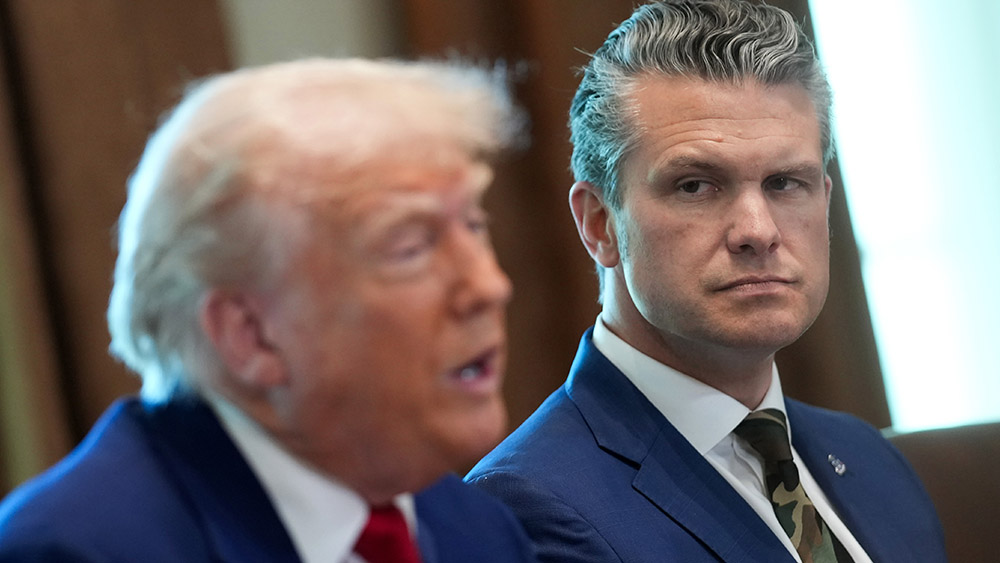
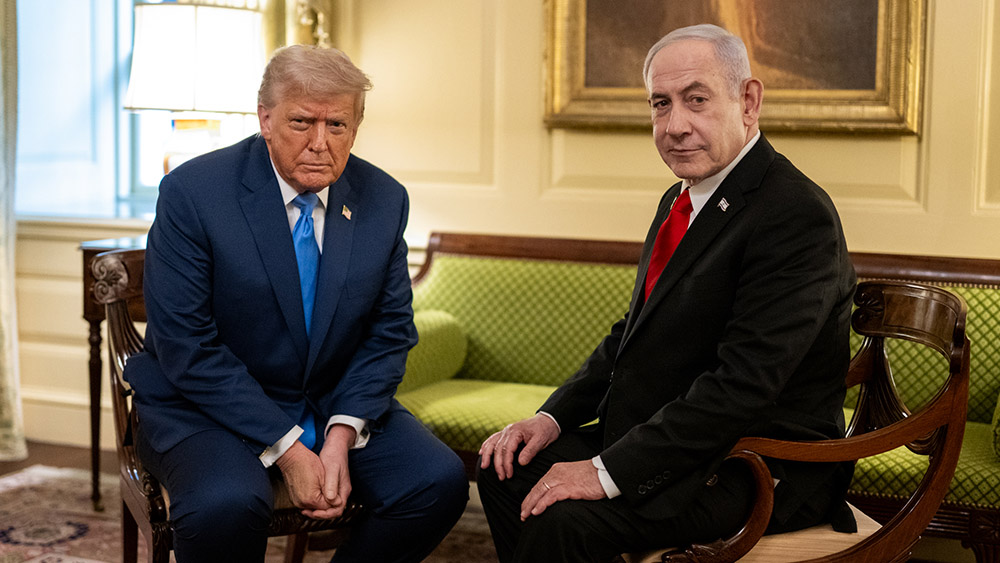
WASHINGTON — On February 11, 2026, in the White House Situation Room, Israeli Prime Minister Benjamin Netanyahu delivered a secret presentation to President Donald Trump and his closest advisers that would set the United States on a path to war with Iran — a conflict that has since killed more than 3,500 people, including 13 American service members, and triggered a global energy crisis.
The presentation represented the culmination of years of Israeli lobbying for American military action against the Islamic Republic, dating back to Trump’s first term. What emerged from declassified reporting by The New York Times, based on extensive interviews with administration officials, reveals a decision-making process where the president’s own intelligence and military leadership warned him that Israel’s promises were oversold, yet he proceeded anyway.
The Situation Room Pitch: Four Promises That Didn’t Hold
Netanyahu’s Feb. 11 presentation to Trump and his senior team contained a series of predictions that have since proven false, according to the Times report and corroborated by The Times of Israel. The Israeli leader told Trump that Iran’s ballistic missile program could be destroyed in a few weeks; that Tehran would be too weakened to block traffic through the Strait of Hormuz; that Iran would be unable to strike U.S. assets in neighboring countries; and that the regime was ripe for collapse, with Kurdish fighters ready to invade from Iraq.
“Sound good to me,” Trump reportedly told Netanyahu after the presentation — words the Israeli leader took as a green light for what would become a joint U.S.-Israeli operation.
But at a follow-up meeting on Feb. 12 with only American officials present, U.S. intelligence systematically dismantled the Israeli assessment. CIA Director John Ratcliffe called the regime change prediction “farcical.” Secretary of State Marco Rubio reportedly responded: “In other words, it’s bulls***.”
Gen. Dan Caine, chairman of the Joint Chiefs of Staff, told Trump directly that he had been “oversold” by the Israelis, describing their approach as “standard operating procedure” where “they know they need us, and that’s why they’re hard-selling.”
Internal Dissent: Vance Alone Called War a ‘Terrible Idea’
Vice President JD Vance emerged as the most vocal opponent of military action within Trump’s inner circle. He warned the president that war with Iran could unleash regional chaos, create mass casualties, and risk splitting Trump’s political base — potentially appearing as “a betrayal” to voters who supported Trump’s anti-war platform.
White House communications director Steven Cheung raised concerns about “public relations fallout” given Trump campaigned explicitly against launching new overseas wars. Cheung also questioned how the administration would explain that it had previously claimed Iran’s nuclear program was “obliterated” after June 2025 strikes, while now citing an “imminent” nuclear threat.
White House counsel David Warrington, a Marine veteran, told the president the decision was “deeply personal” because he had known an American service member killed by Iran years earlier. He advised that if Israel intended to proceed regardless, the United States should join them.
Chief of Staff Susie Wiles reportedly worried about America “being dragged into another war” but chose not to voice those concerns directly to Trump in front of others, instead encouraging military advisers to share their expertise.
The Military Reality Trump Dismissed
Caine shared with Trump “alarming” military assessments that major operations against Iran would “drastically deplete” American weapon stockpiles, particularly missile intercepters already strained from supporting Ukraine and Israel. He warned of “enormous difficulty” securing the Strait of Hormuz if Iran moved to block it — a scenario Trump dismissed, believing Iran would “capitulate before it came to that.”
Despite these warnings, Caine never directly told the president that war was a “terrible idea,” believing his role was to provide options, not sway policy. By Feb. 26, when Trump convened a final 90-minute Situation Room meeting, he had “effectively made up his mind weeks earlier,” according to multiple advisers.
“Operation Epic Fury is approved. No aborts. Good luck,” Trump said less than a day later, authorizing the strikes that began Feb. 28.
A Pattern of Outsourcing War Decisions
This episode echoes decades of U.S. foreign policy decisions where Israeli leaders have pressed American presidents for military action against common adversaries. During the George W. Bush administration, neoconservative advocates within and outside the administration pushed for the Iraq War partly on Israel’s security concerns. Former National Security Adviser John Bolton, who served under Trump from 2018-2019, told interviewer Afshin Rattansi that he “urged that our objective be regime change, so did Netanyahu” during both Trump terms.
The difference this time: Trump’s own intelligence community and top military leadership explicitly warned him that Israel’s promises were unrealistic and that the operation could spiral into a prolonged conflict depleting American resources. The president proceeded anyway, reportedly telling media personality Tucker Carlson, who repeatedly lobbied against the war: “I know you’re worried about it, but it’s going to be OK. Because it always is.”
A War Based on Overpromises Now Unfolds
Nearly six weeks after the initial strikes, none of Netanyahu’s predictions have materialized. Iran continues daily ballistic missile launches, has blocked the Strait of Hormuz — causing a global energy crisis that prompted Trump to post an expletive-laden Truth Social message over the weekend — and has carried out thousands of missile and drone attacks on neighboring countries. The promised Kurdish ground invasion was pulled after media leaks, allied lobbying, and Kurdish wariness.
The former national security adviser John Bolton, who has long advocated for regime change in Iran, criticized Trump for failing to “make the case to the American people” about why such action was necessary. For now, the United States finds itself in a conflict its own leaders warned against, with the Strait of Hormuz blocked, a fifth of the world’s oil supply disrupted, and no clear endgame in sight.
Sources for this article include:
Submit a correction >>
Tagged Under:
big government, chaos, debt bomb, debt collapse, deep state, energy crisis, Globalism, government debt, iran war, market crash, national security, resist, risk, supply chain, supply chain warning, terrorism, Trump, Twisted, Tyranny, WWIII
This article may contain statements that reflect the opinion of the author
Get independent news alerts on natural cures, food lab tests, cannabis medicine, science, robotics, drones, privacy and more from NewsTarget.com
Get independent news alerts on natural cures, food lab tests, cannabis medicine, science, robotics, drones, privacy and more from NewsTarget.com
RECENT NEWS & ARTICLES